How Much Does Spray Foam Insulation Cost in St. George, Utah? (2026 Guide)
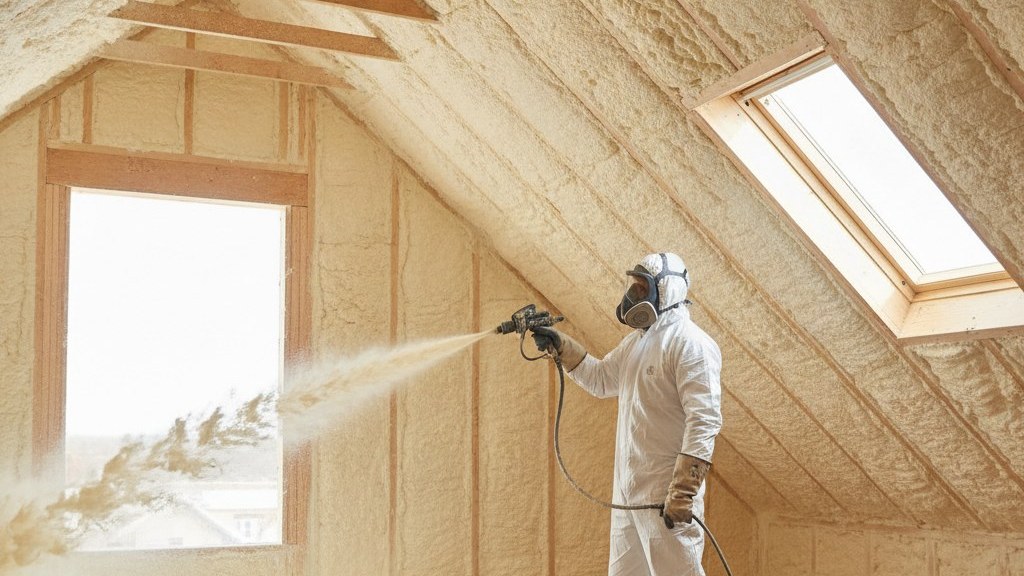
The honest answer to "how much does spray foam cost" is a range, not a number: roughly $1.50 to $5.00 per square foot installed across Washington County, with open-cell foam sitting at the lower end and closed-cell at the higher end. That's a wide enough range that it isn't very useful on its own, so this guide walks through what actually pushes a specific project toward one end or the other.
Open-cell versus closed-cell is the biggest single driver. Open-cell runs cheaper per square foot because it's a lighter-density product that expands more per unit of material, so it costs less to fill the same cavity. Closed-cell is priced by the board-foot at a higher rate because it's denser, cures to roughly double the R-value per inch, and resists moisture in a way open-cell doesn't. A whole-attic open-cell job and a roof-deck closed-cell conversion on the same size house can land at meaningfully different total costs, and that's before either number gets adjusted for access or thickness.
Project type is the second driver. New construction, where framing is open and there's no old insulation to deal with, is generally the most efficient install condition and prices accordingly. Retrofit and remodel work costs more per square foot when it involves removing damaged fiberglass first, working around finished surfaces, or coordinating around occupied space. A correction job -- removing a previous contractor's failed foam before re-spraying -- has its own separate cost structure entirely, since removal, disposal, and substrate inspection all get added before the new foam goes in.
Square footage and application type matter more than most homeowners expect. A 2,000 square foot attic floor seal and a 2,000 square foot roof-deck conversion on the same house are not the same price, because the roof-deck job usually runs thicker closed-cell foam across a larger, more complex surface -- rafter bays, ridge details, eave transitions -- while an attic floor seal is a flatter, more straightforward plane. Crawl space and rim joist work is priced by linear footage of perimeter wall rather than a flat square-foot number, since crawl space height and access change the labor time more than the square footage alone does.
Access is the factor that surprises people most. A full-height, walkable attic with a generous hatch costs less to work in than a low-clearance tile-roof attic where the crew is working on their knees the whole time. A detached shop with open truss framing installs faster than an attached garage ceiling with existing drywall that has to come down first. We measure and photograph the actual space during every estimate specifically because access differences like this can move a quote meaningfully in either direction.
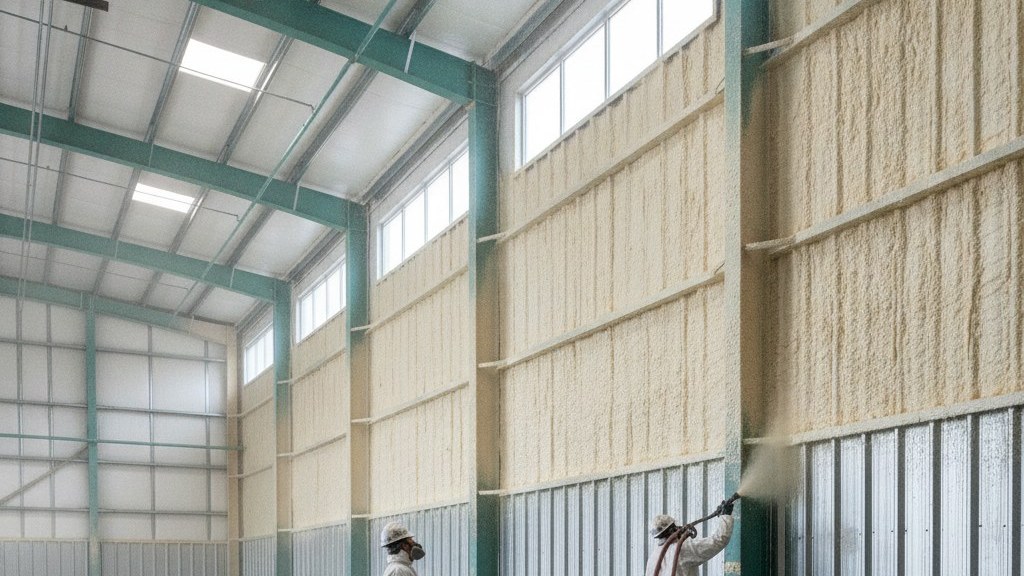
Commercial and metal building pricing works a little differently. Those jobs are quoted by total interior panel square footage -- roof and walls typically priced separately since roof access usually requires lift equipment -- and by the target thickness for the building's actual use case. A basic condensation-control pass on an ag building costs less per square foot than a full climate-controlled shop insulation package, even on buildings of similar size.
A few real-world reference points help make the range concrete. A typical 1,800 to 2,200 square foot St. George home getting an attic-floor open-cell seal usually lands toward the lower-middle of the range on a per-square-foot basis. The same home converting to a full closed-cell roof-deck system costs more overall, both because closed-cell runs a higher rate and because the roof deck surface area, including rafter bays and transitions, is larger than the flat attic floor. A two-car attached garage ceiling insulation project is a smaller total dollar figure but can carry a higher per-square-foot rate if drywall removal is part of the scope. A mid-size metal shop or self-storage building runs into a different pricing conversation entirely, driven by total panel area and lift access rather than a simple square-foot multiplier.
Rocky Mountain Power's Wattsmart Homes program is worth checking before you finalize a project, since it periodically offers rebates tied to qualifying insulation and air-sealing upgrades for customers in its service territory. Dixie Power customers should ask their provider directly about any current efficiency incentive, since program availability changes. Either way, it's worth factoring a potential rebate into your net cost conversation before assuming the sticker price is the final number.
The way to get an accurate number for your specific project is an on-site estimate, not a phone quote based on square footage alone. We walk the attic, crawl space, garage, or building in question, measure the actual area, check access and existing insulation condition, and build the number from what's actually there rather than a generic per-square-foot average. Call 844-967-5247 or email josh@contractorschoiceagency.com to schedule a walkthrough, and we'll leave you with a written scope and price before any work starts.
Timing your project also has a real effect on scheduling, if not always directly on price. Spring and early summer -- before June's heat and well before the mid-July monsoon window -- tends to be the busiest stretch for attic and roof-deck work in Washington County, since homeowners are trying to get ahead of peak cooling season. Booking a few weeks out from that rush, either earlier in spring or in the fall after monsoon season winds down in September, generally means more scheduling flexibility and less pressure to compress a multi-day commercial job into a tight window.
One more factor worth planning for: disposal and prep costs on correction or retrofit jobs. If your project involves removing old, damaged, or previously failed insulation before new foam goes in, that removal and haul-off is a real line item, not a rounding error, and it's part of why a correction project (see our spray foam removal and correction service) is priced separately from a straightforward new install. Ask for that breakdown explicitly if your project involves any removal, so you're comparing quotes on an apples-to-apples basis rather than one contractor quietly skipping a step another one included.
Frequently asked questions
Not always -- it depends on the application. Closed-cell earns its higher cost on roof decks, crawl space walls, and exterior-exposed surfaces where moisture resistance and rigidity matter. On interior partition walls or a vented attic floor, open-cell often delivers the comfort improvement you're after at a lower total cost.
Yes, when it's necessary -- removing sagging, damaged, or rodent-contaminated fiberglass adds a labor step before the foam goes in. We'll tell you during the walkthrough whether your existing insulation needs to come out first or whether we can spray without removing it.
We can give you a general range based on square footage and project type, but the firm number always comes from an on-site walkthrough, since access, existing insulation condition, and roof or building specifics can move the price meaningfully in either direction.
Ready for a free quote?
Tell us about your home and we'll build a clear, no-pressure quote.