Why Metal Buildings in St. George Sweat -- and How Spray Foam Stops It
It surprises a lot of building owners the first time they see it: a metal roof panel, baked all day in 104 to 106-degree July heat, dripping water onto stored inventory by early morning. It looks like a roof leak, but there's often no leak at all -- it's condensation, and it's a predictable, physics-driven problem in exactly the kind of desert climate St. George sits in.
The mechanism is straightforward once you see it laid out. Metal panels have almost no thermal mass, so their surface temperature tracks the surrounding air almost instantly, with no lag the way a thick masonry or wood-framed wall has. St. George's dry desert air means clear skies most nights, and clear skies allow strong radiant cooling -- exposed surfaces radiate heat out to the night sky faster than they absorb it back from the surrounding air, so a metal roof panel can end up colder than the ambient outdoor air temperature by early morning. If that panel surface drops below the interior dew point -- which depends on how much moisture is inside the building from vehicles, livestock, stored materials, or simple occupancy -- water condenses directly on the steel.
This is a bigger issue here than it sounds like it should be, precisely because the desert climate has such a wide day-to-night temperature swing. A summer day pushing past 104 degrees can still see a night-time low back in the 70s, and that swing is exactly what drives strong radiant cooling of an exposed metal surface after sunset. Buildings in more moderate, humid climates with smaller diurnal swings don't see the same intensity of overnight condensation, even though people assume a wetter climate would be the bigger risk.
The consequences compound over time. Dripping condensation onto stored hay, feed, or agricultural product causes direct spoilage. On stored vehicles, RVs, or boats, it's a slow path to corrosion and interior mildew. On tools, inventory, or equipment in a shop or warehouse, it's rust and degraded packaging. And on the building's own steel framing -- the purlins and structural members behind the panel -- years of repeated condensation cycling is a genuine long-term corrosion risk to the structure itself, not just what's stored inside it.
The traditional fix in a lot of pole barn and ag building construction is a fiberglass blanket system stapled or screwed up against the underside of the panel, sometimes with a separate vapor-barrier facing. It helps, but it has a structural weakness: the blanket relies on staying tightly compressed against the panel to work, and over time it sags, gaps open at the seams and screw penetrations, and once a gap opens, humid interior air reaches the cold steel behind the insulation and condenses right there -- often invisibly, inside the wall or roof assembly, until it's caused enough damage to notice from the outside.
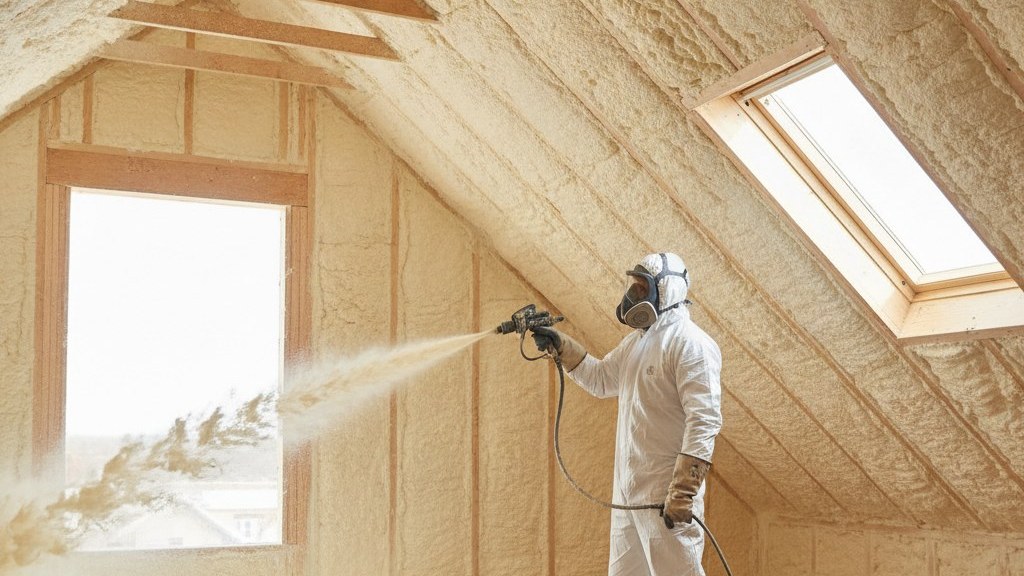
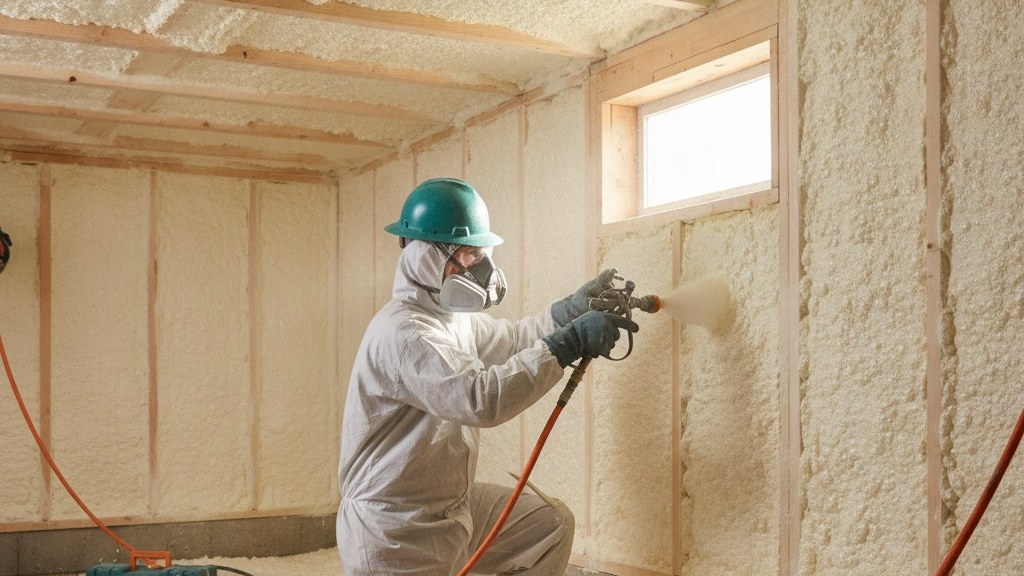
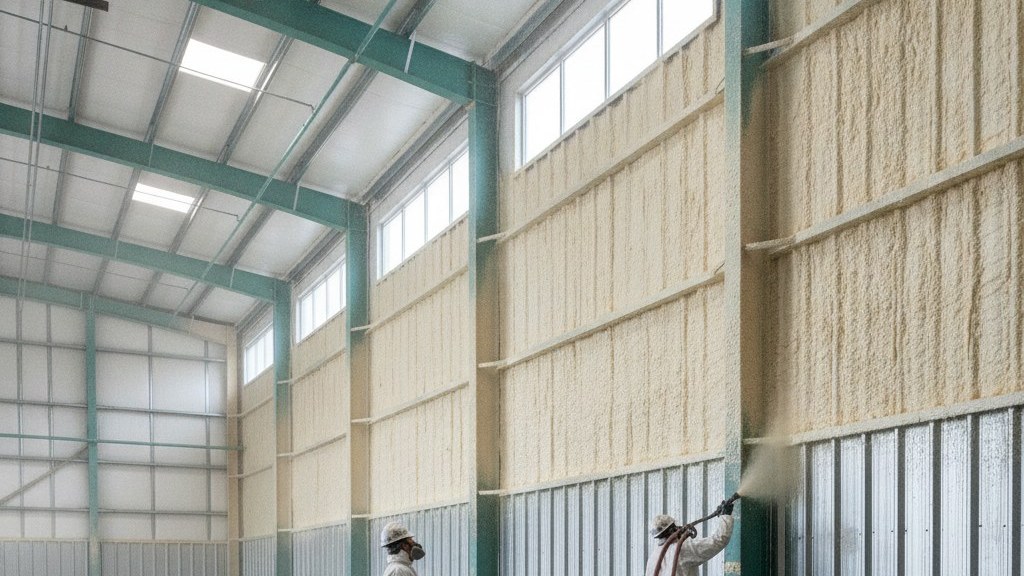
Spray foam solves the actual mechanism, not just the symptom. Closed-cell foam sprayed directly onto the interior face of the metal panel bonds to the steel with no air gap at all -- there's no cavity for humid air to migrate into and reach a cold surface, because the insulation is the surface it's touching. That direct adhesion is the real reason spray foam stops metal building condensation more reliably than a blanket system: it removes the physical pathway the moisture needs, not just adds R-value.
There's a secondary benefit building owners notice immediately even before the condensation issue fully proves itself out over a season: noise. An uninsulated metal roof turns a monsoon downpour or hailstorm into a genuinely loud event inside the building. A few inches of closed-cell foam sprayed to the roof panel measurably dampens that noise, which matters for anything from a working shop to an event space to livestock that get stressed by loud weather.
This work applies across a wide range of building types around Washington County -- self-storage facilities protecting customers' stored belongings, RV and boat storage buildings, agricultural and ranch buildings, steel-frame shops and light-industrial space, and pole barns of every size. If you're seeing unexplained moisture on the inside of a metal roof or wall panel, especially first thing in the morning after a hot, clear day, condensation -- not a roof leak -- is the first thing worth ruling in or out before assuming you need a roofer.
It's worth framing the cost of fixing this against what condensation actually puts at risk. A self-storage operator with customer belongings on the line, a rancher with feed or equipment stored under a metal roof, or a shop owner with inventory and tools exposed to overnight drip damage is weighing a one-time insulation cost against a recurring, compounding loss that shows up as spoiled product, corroded tools, or customer complaints. Framed that way, the spray foam project is usually closer to a maintenance investment than a discretionary upgrade.
We also get asked whether ventilation alone -- ridge vents, powered exhaust fans, or simply leaving doors open -- can solve the problem instead of insulation. Ventilation can reduce interior humidity somewhat, which helps at the margins, but it doesn't change the underlying physics of a bare metal panel radiating below the dew point on a clear night. In most cases we see, buildings already running ventilation still condensate, because moving air around the space doesn't stop the panel surface itself from getting cold enough to trigger it. Direct-to-metal insulation addresses the actual surface temperature problem instead of just managing the humidity around it.
Frequently asked questions
Condensation typically shows up as widespread moisture across the underside of the panel, often worse near sunrise after a clear night, rather than a localized drip tied to a specific seam, fastener, or penetration. A physical inspection of the panel and any suspect leak points is the reliable way to tell the two apart.
When applied correctly with full coverage and adequate thickness, direct-to-metal closed-cell foam effectively eliminates the condensation mechanism, since it removes the air gap and vapor pathway that lets interior humidity reach the cold steel surface.
It works on existing buildings just as well as new ones -- most of our commercial and metal building work is retrofitting insulation into buildings that were built with none, or replacing a failed fiberglass blanket system.
It depends on the building's use case -- a basic condensation-control pass runs thinner than a full climate-controlled shop insulation package. We size it during the on-site assessment based on what the building is actually being used for.
Ready for a free quote?
Tell us about your home and we'll build a clear, no-pressure quote.