Attic & Roof Deck Spray Foam Insulation
Roof-deck and attic-floor spray foam that shuts down the single hottest surface on a Washington County home, pulling attic temperatures down and taking real load off the air conditioner from May through September.
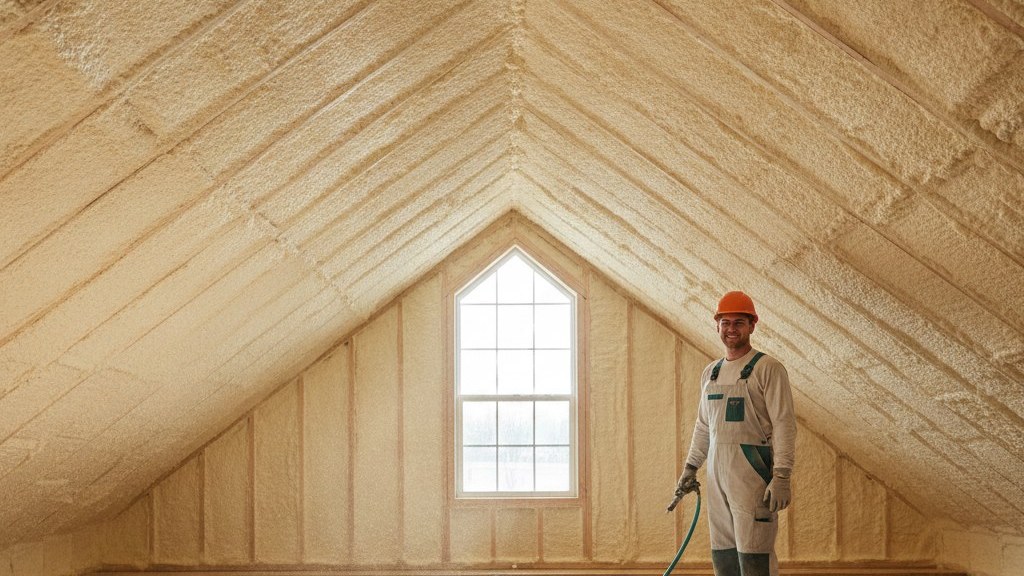
An unvented asphalt-shingle or tile attic in St. George can hit 140 to 150 degrees on a July afternoon, and every duct run, air handler, and sheet of drywall sitting under that roof deck absorbs it. Fiberglass batts laid across the attic floor slow that heat down, but they don't stop it, and they do nothing for the ductwork and equipment that's actually sitting inside the superheated space. Spray foam gives you two different ways to solve that problem, and St. George Foam installs both, depending on how your attic and roofline are built.
The first option is a roof-deck application: closed-cell foam sprayed directly to the underside of the roof sheathing, which pulls the entire attic into the conditioned envelope of the house. Once the attic is inside the thermal boundary, the HVAC equipment and duct runs living up there are no longer baking in triple-digit air - they're sitting in roughly the same temperature as the rest of the house. For homes with attic-mounted air handlers, which is most production-built houses in St. George, Washington City, and Hurricane, that single change often does more for cooling performance than any other upgrade on the property.
The second option is an attic-floor application: foam sprayed across the ceiling plane itself, sealing top plates, can-light housings, plumbing stacks, and duct boots while keeping the attic vented and outside the thermal envelope. It costs less than a full roof-deck conversion and it's the right call for a lot of homes - particularly older construction where the roof framing, decking condition, or budget doesn't line up with a full conversion. We walk the attic with every customer before quoting and tell you plainly which approach fits your roof, not just the one that's easier to sell.
We run both approaches as a normal part of the business, on new construction and on twenty-year-old homes where the original fiberglass has settled, been torn up by rodents, or simply never covered the eaves properly to begin with. If a previous installer sprayed foam in your attic and it's not performing - too thin at the eaves, missing an ignition barrier, or failing an inspection - that's a call we take too; see our spray foam removal and correction work for what that process looks like.
Why homeowners choose it
- Pulls attic-mounted HVAC equipment and ductwork inside the conditioned envelope on roof-deck jobs, cutting duct loss
- Reduces attic air temperature from the 140-150 degree range down closer to house temperature in summer
- Lowers the number of hours your AC compressor runs on peak July and August afternoons
- Seals the ceiling-plane leaks fiberglass batts never stop: top plates, can lights, plumbing stacks, duct boots
- Keeps attic storage space usable instead of an oven half the year
- Closes off common rodent and pest entry points at the eaves and soffit
Roof-Deck vs. Attic-Floor: Which One Fits Your House
The right call depends on what's already up there. If ductwork and an air handler live in the attic, a roof-deck conversion usually pays for itself faster because it takes the equipment out of the heat entirely rather than just slowing heat transfer through the ceiling. If the attic is empty mechanically and just holds boxes and the water heater vent, an attic-floor application often gets you most of the comfort gain for a lower price.
Roof pitch and decking condition matter too. Low-slope tile roofs with tight attic clearance are harder to spray evenly at the eaves than a steep-pitch asphalt-shingle roof with full walking room, and that access difference shows up in both the quote and the install timeline. We measure and photograph the attic on every estimate so the recommendation is based on your roof, not a generic number.
- Attic-mounted HVAC or ductwork usually points toward roof-deck
- Empty, storage-only attics often do fine with attic-floor sealing
- Low-slope tile roofs need extra care and time at the eave line
- Budget and roof deck condition both factor into the final recommendation
How the Install Works
On a roof-deck job we spray closed-cell foam directly to the sheathing between the rafters, typically two to three inches depending on the target R-value, then apply an intumescent ignition-barrier coating over any foam left exposed to living space per code, since foam by itself isn't a fire-rated finish. Vents get sealed or removed as part of converting the attic to unvented, and any HVAC equipment up there gets worked around carefully so ducts and refrigerant lines aren't damaged during spraying.
On an attic-floor job the crew works the ceiling plane systematically: top plates first, then every penetration - can lights, bath fan housings, plumbing vents, duct boots, the attic hatch itself - before filling the open floor area. Cure time for both open-cell and closed-cell foam is fast; the space is typically safe to re-enter within hours, and full off-gas of the initial application smell is usually gone within a day or two in St. George's low humidity.
The Full-Service Difference
A lot of insulation crews in Washington County do fiberglass batts most weeks and treat spray foam as a side offering. We run dedicated foam crews on residential attics and roof decks every day, which is also why we're comfortable taking on the jobs other companies pass on - steep tile roofs, tight attic clearance, additions that have to match an existing envelope, and attics where a previous contractor's foam job needs to be pulled out and redone correctly before we spray.
Ideal for
- New-construction homes where the roof deck is open before shingles or tile go on
- Homes with an attic-mounted air handler and ductwork running through unconditioned space
- Tile-roofed homes holding extra radiant heat through the afternoon and into the evening
- Older homes where fiberglass batts have settled, shifted, or been damaged and no longer cover the ceiling plane evenly
- Additions with new roof framing that need to match the performance of a foam-insulated main house
What affects the cost
Attic & Roof Deck questions, answered
For attic-floor jobs we typically remove damaged, settled, or contaminated fiberglass first so the foam bonds directly to the deck and ceiling plane instead of sitting on top of compromised material. If your existing insulation is in decent shape, we'll tell you honestly whether removal is actually necessary.
Spraying the underside of the deck doesn't touch the roofing material itself, so it doesn't interact with most manufacturer shingle or tile warranties. We recommend confirming with your specific roofing manufacturer if your home is still under an active roof warranty, just as a formality.
It's common for a vented attic here to sit 40 to 60 degrees hotter than the living space on a peak August afternoon. A roof-deck conversion is aimed directly at closing that gap since it brings the attic into the conditioned envelope instead of just insulating against it.
It's required anywhere the foam is exposed to occupied or storage space rather than sealed behind drywall - a finished attic room, a knee-wall closet, or an open rafter bay someone could walk into. We include it automatically wherever code calls for it.
Attic & Roof Deck done right, by a local Washington County crew
We're a full-service spray foam company — not a general insulation contractor that also offers spray foam as one option among many. Spray foam is the only material we install, but we don't limit the scope: residential and commercial, new construction, and correction of prior spray foam jobs other crews got wrong. Attic & Roof Deck isn't a commodity, and the result depends entirely on how carefully it's scoped and installed for your specific building in a genuine hot-desert climate. We assess what your property actually needs, prep and air-seal properly, and install to your elevation-appropriate, IECC Zone 3B R-value target, so the work delivers the cooling-bill relief it's supposed to.
We serve St. George, Washington City, Hurricane, Santa Clara, Ivins, LaVerkin, and Toquerville. St. George's summers are the whole story here — dark roof decks push attic temperatures to 130-150°F+ from May through September, and that heat radiates straight down into living space and forces your AC to run nearly nonstop. We scope every job around that cooling load, not around a heating-season assumption borrowed from a colder climate. Every job starts with a free, no-pressure quote.
Just as important, we treat your home like the system it is. Insulation, air sealing, and ventilation all interact, and getting one right while ignoring the others leaves comfort and savings on the table. When we scope your attic & roof deck, we look at how it fits the whole picture — so the finished result performs the way it should, holds up through a genuine St. George summer, and actually lowers the AC bills you feel every month, whether you're served by Rocky Mountain Power (including its Wattsmart Homes program) or Dixie Power.
Free assessment
We evaluate your home and give you a clear, itemized quote.
Expert install
We prep, air seal, and install your attic & roof deck to spec — clean and on schedule.
Savings you can feel
A cooler home, lower AC bills, and honest advice about what your home needs.
Related services
Ready for a free attic & roof deck quote?
Tell us about your home and we'll put together a clear, no-pressure spray foam insulation quote — built for St. George's real summers.