Garage & Shop Spray Foam Insulation
Spray foam for attached garages, detached shops, RV garages, and home workshops across Washington County, aimed at turning a space that's unusable half the year into one you can actually work, park, or train in year-round.
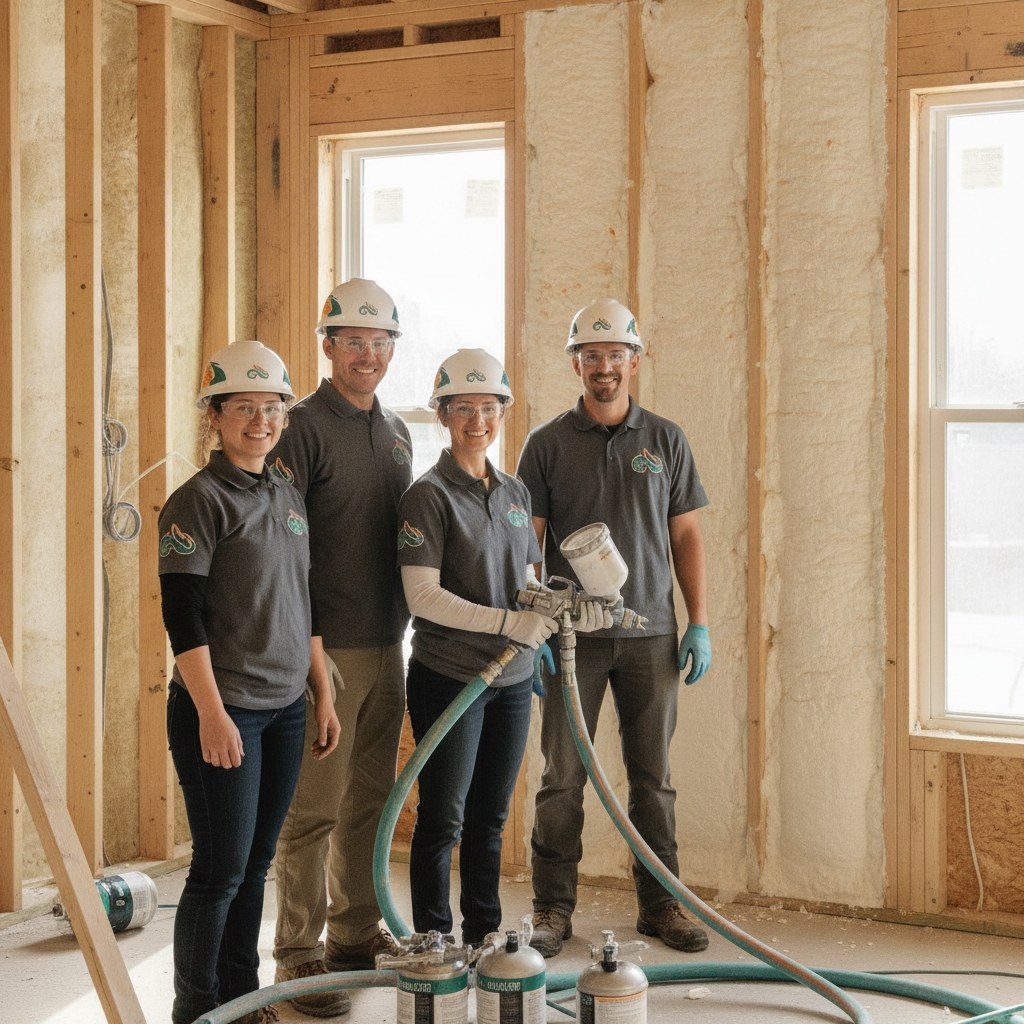
Garages and shops in St. George get treated as an afterthought by whoever built them, and it shows every July when the space hits temperatures that make it unusable for anything beyond parking a car. Newer subdivisions around Desert Color, Sun River, and Little Valley increasingly include RV garages and oversized bays built for hobbyists, and even those get built with minimal or no insulation as a standard spec - the builder assumes it's a storage space, not somewhere anyone plans to spend time.
We treat garage and shop insulation as its own category because the use cases are so different from a standard living space. A car collector wants stable temperature swings to protect paint and interiors. A home gym conversion needs the space usable at 6 a.m. and 9 p.m. without running a portable AC unit at full blast. A workshop with power tools and glued-up projects needs consistent humidity and temperature more than a bedroom does. We size the insulation package to what the space is actually going to be used for.
Attached and detached buildings get different treatment. An attached garage under living space or sharing a wall with conditioned rooms usually gets the ceiling and shared walls sprayed to control heat and sound transfer into the house. A detached shop or pole-barn-style outbuilding gets treated more like a small commercial structure - walls, roof deck, and any roll-up door framing all factor into the plan since there's no adjacent conditioned space doing any of the work for you.
Metal roll-up doors are one of the biggest weak points in almost every garage we quote, whether it's a two-car attached garage or a four-bay detached shop. We address that directly during the walkthrough rather than insulating everything around the door and leaving the single largest surface area on the wall untouched.
Why homeowners choose it
- Cuts summer interior garage temperatures enough to make the space usable for work, hobbies, or exercise
- Reduces heat and noise transfer into adjacent living space on attached garages
- Protects vehicles, tools, and stored materials from extreme temperature swings
- Improves comfort for home gym, workshop, or studio conversions built into garage space
- Works on detached shops and pole-barn-style outbuildings, not just attached garages
- Addresses metal roll-up door framing, a commonly overlooked heat-loss point
Attached Garage vs. Detached Shop
An attached garage shares at least one wall or a ceiling with conditioned living space, so insulating the shared surfaces cuts both heat gain in the garage and heat and sound transfer into the house. We typically spray the ceiling (especially with a bedroom or living space above), the shared interior wall, and sometimes the garage door header area, depending on layout.
A detached shop or outbuilding doesn't get any help from an adjacent conditioned space, so the whole building envelope - walls, roof or ceiling, and door framing - needs to be addressed for the insulation package to actually change how the space performs. We scope these more like small standalone buildings than an add-on to the house next door.
Metal Roll-Up Doors and Other Weak Points
A standard uninsulated steel roll-up door is one of the largest single surfaces of poor thermal performance in a typical garage. We can't spray foam directly onto a moving door panel, but we treat the surrounding framing, header, and any adjacent wall sections carefully, and can point you toward insulated door panel options as a companion upgrade where it makes sense for the project.
Turning a Garage Into Usable Space Year-Round
Most of these projects come down to one question: does the homeowner want the garage or shop to function as real usable space, or is it staying a hot box for storage? Once that's answered, the insulation package follows from it - a home gym conversion gets treated more aggressively than a garage that's just parking two cars and holding a workbench.
Ideal for
- Detached shops and workshops used for woodworking, mechanics, or hobby work
- RV garages and oversized bays in newer Desert Color and Sun River-area construction
- Home gym or studio conversions built into an existing garage
- Car collectors and enthusiasts wanting stable year-round garage temperatures
- Pole-barn-style detached buildings without any existing insulation package
What affects the cost
Garage & Shop Spray Foam questions, answered
If the drywall is already installed and finished, spray foam generally isn't an option without opening the wall or ceiling first. We'll assess it during the walkthrough and let you know honestly whether the job makes sense as-is or needs some drywall removed first.
Yes, particularly on shared walls and ceilings between the garage and living space - spray foam noticeably reduces sound transfer compared to an uninsulated wall or ceiling cavity.
Regularly - a lot of our shop and pole-barn work is the first insulation that building has ever had, since many detached structures get built with no thermal package as standard.
We don't spray the moving door panel, but we address the surrounding framing carefully and can point you toward insulated door panel replacement as a companion upgrade if the door itself is the weak point.
Garage & Shop Spray Foam done right, by a local Washington County crew
We're a full-service spray foam company — not a general insulation contractor that also offers spray foam as one option among many. Spray foam is the only material we install, but we don't limit the scope: residential and commercial, new construction, and correction of prior spray foam jobs other crews got wrong. Garage & Shop Spray Foam isn't a commodity, and the result depends entirely on how carefully it's scoped and installed for your specific building in a genuine hot-desert climate. We assess what your property actually needs, prep and air-seal properly, and install to your elevation-appropriate, IECC Zone 3B R-value target, so the work delivers the cooling-bill relief it's supposed to.
We serve St. George, Washington City, Hurricane, Santa Clara, Ivins, LaVerkin, and Toquerville. St. George's summers are the whole story here — dark roof decks push attic temperatures to 130-150°F+ from May through September, and that heat radiates straight down into living space and forces your AC to run nearly nonstop. We scope every job around that cooling load, not around a heating-season assumption borrowed from a colder climate. Every job starts with a free, no-pressure quote.
Just as important, we treat your home like the system it is. Insulation, air sealing, and ventilation all interact, and getting one right while ignoring the others leaves comfort and savings on the table. When we scope your garage & shop spray foam, we look at how it fits the whole picture — so the finished result performs the way it should, holds up through a genuine St. George summer, and actually lowers the AC bills you feel every month, whether you're served by Rocky Mountain Power (including its Wattsmart Homes program) or Dixie Power.
Free assessment
We evaluate your home and give you a clear, itemized quote.
Expert install
We prep, air seal, and install your garage & shop spray foam to spec — clean and on schedule.
Savings you can feel
A cooler home, lower AC bills, and honest advice about what your home needs.
Related services
Ready for a free garage & shop spray foam quote?
Tell us about your home and we'll put together a clear, no-pressure spray foam insulation quote — built for St. George's real summers.